Economics
Buying vs. Leasing Modular Workforce Housing
Duration, balance sheet treatment, relocation plans and residual value decide whether you should buy or lease a workforce camp. A decision framework with the break-even math.
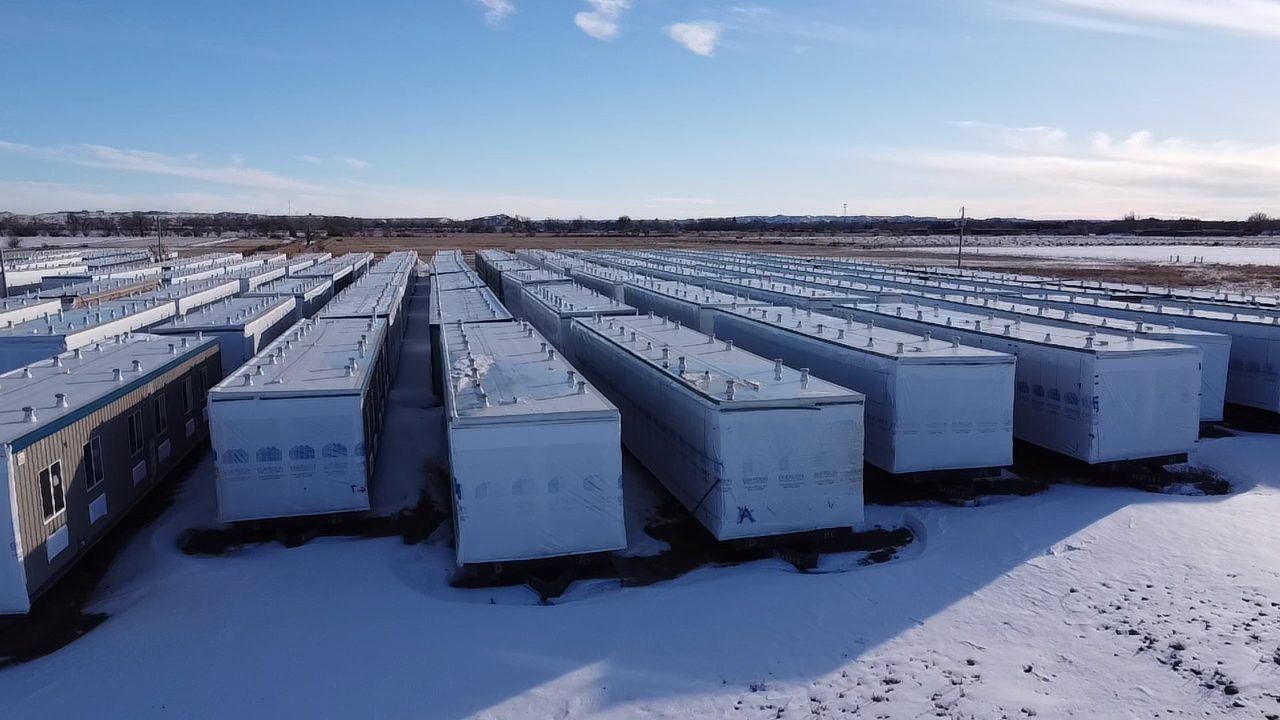
Buy or lease is the question every procurement team asks second, right after "how fast can it get here." The honest answer depends on four variables, and the break-even is usually more obvious than people expect.
Variable one: duration
Duration is the dominant factor. Lease rates on workforce housing typically recover the asset value over roughly 30 to 40 months of continuous rental. That gives you a rough rule:
- Under 18 months: lease. You will not approach break-even, and you avoid the demobilization and resale problem entirely.
- 18 to 36 months: it depends on the other three variables below.
- Over 36 months: buy. You are effectively purchasing the camp through lease payments anyway, without owning anything at the end.
Be realistic about duration. Industrial projects slip. If your 20-month schedule has any chance of becoming 32 months, price the buy case.
Variable two: how your finance team wants it treated
Leasing is opex. It hits the project P&L monthly, it needs no capital approval, and on many projects it can be passed through to the client as a reimbursable cost. For a contractor working on thin margins with a client-funded scope, that is often decisive on its own.
Buying is capex. It creates a depreciable asset, which is a meaningful difference from hotel nights that carry no tax shield at all. It also creates a balance-sheet item that has to be managed, insured and eventually disposed of.
Ask two questions internally before you model anything: does this project have capital available in this fiscal year, and can housing be passed through to the client? The answers frequently decide the question before the spreadsheet does.
Variable three: will the camp move?
This is the variable most teams undervalue.
If you are running linear work (pipeline spreads, transmission lines, sequential solar farms), you will need housing at the next site too. Owning a relocatable camp turns your second, third and fourth mobilizations into transport and set costs rather than fresh procurement. Every relocation improves the return on the original purchase.
If this is a one-off with no follow-on work in the region, that logic disappears and leasing looks much better.
Variable four: residual value
Used workforce housing is not a distressed asset class. The supply of quality modular camp inventory in North America has been tight since 2021, and demand from the data center buildout is pulling from the same pool. A well-maintained camp commonly resells for a substantial fraction of its purchase price after a multi-year project.
Model your buy case with a residual assumption and be conservative about it. Even a conservative residual changes the comparison materially, because the lease case has a residual of exactly zero.
The break-even worksheet
Run both cases over the same horizon:
- Lease case: monthly rate × months, plus transport in and out, plus install and teardown, plus any restoration obligations at the end of the term.
- Buy case: purchase price, plus transport, plus install, plus assembly materials for roof, floor, corridors and end walls, plus maintenance reserve, minus estimated residual at disposal.
- Apply your internal cost of capital to both.
- Add the value of relocations in the buy case if follow-on work is realistic.
If the buy case comes in within 10% of the lease case, buy. The residual and the optionality are worth more than the spread.
The hybrid nobody asks about
Two structures split the difference and both are available:
- Lease-to-own. Lease during the uncertain early phase; convert to purchase when the project extends, with lease payments credited against the price. This is the right answer when your schedule confidence is low at mobilization.
- Split the camp. Buy the core you will always need, dorms and the kitchen, and lease the surge capacity for the construction peak. When the peak passes, you return the surge units and keep the operating camp.
What does not change either way
Whichever structure you choose, the specification should not move. Arctic-grade insulation with real HVAC and complete electrical, certified units, private or semi-private rooms with real beds, functional laundry, hot meals on rotation schedules and working Wi-Fi. Leasing is a financing decision. It is not a reason to house your crew worse.
If you want the comparison run against your actual project, send us headcount, duration and location and we will quote purchase and lease side by side on the same sheet.
Next step
Get pricing on 404 new, unused beds
Send your headcount, site and timeline. You get purchase and lease pricing plus a camp layout, usually the same day.
- Response time
- Within 1 business day
- Ship lead time
- 24 hours