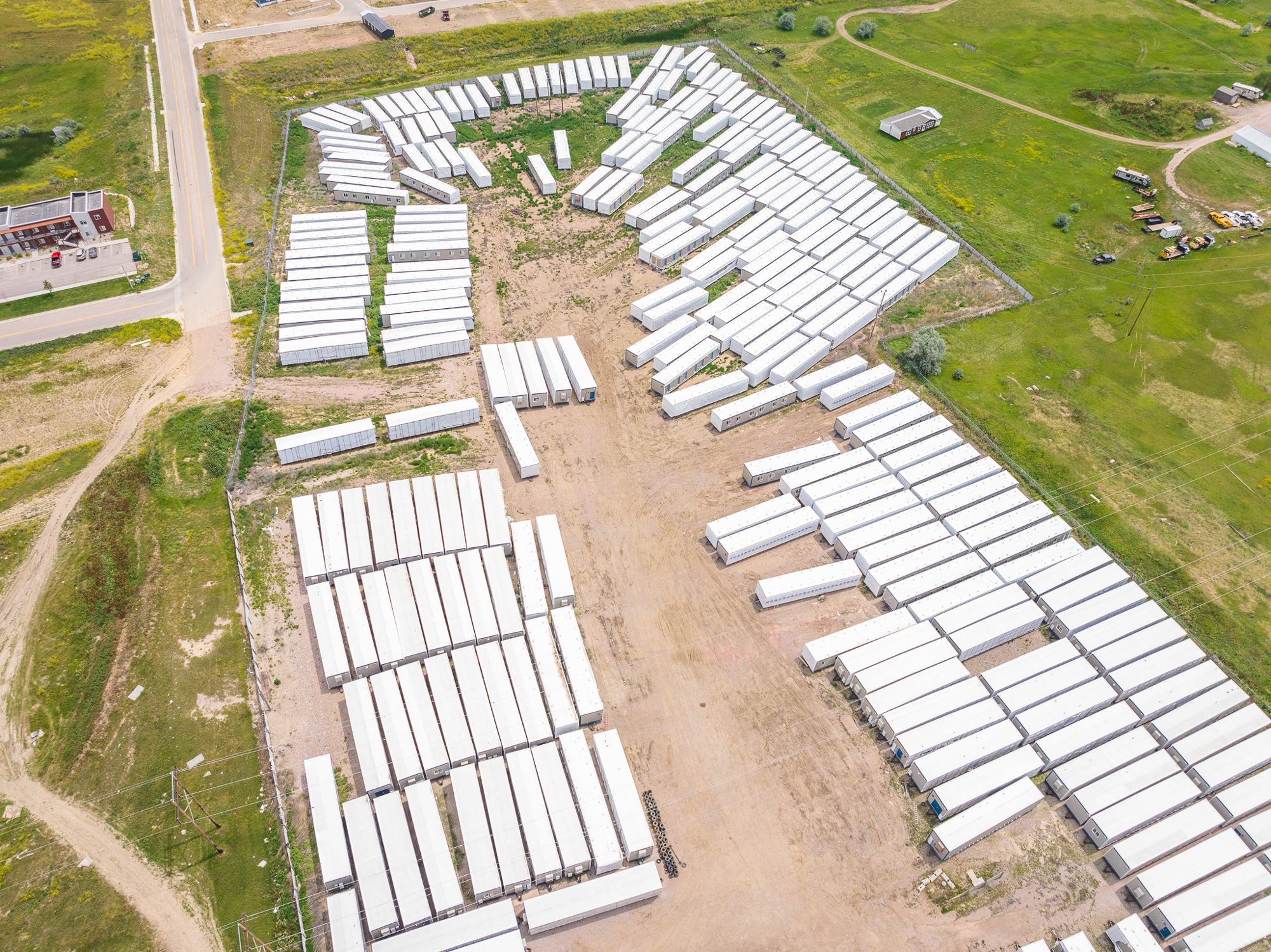
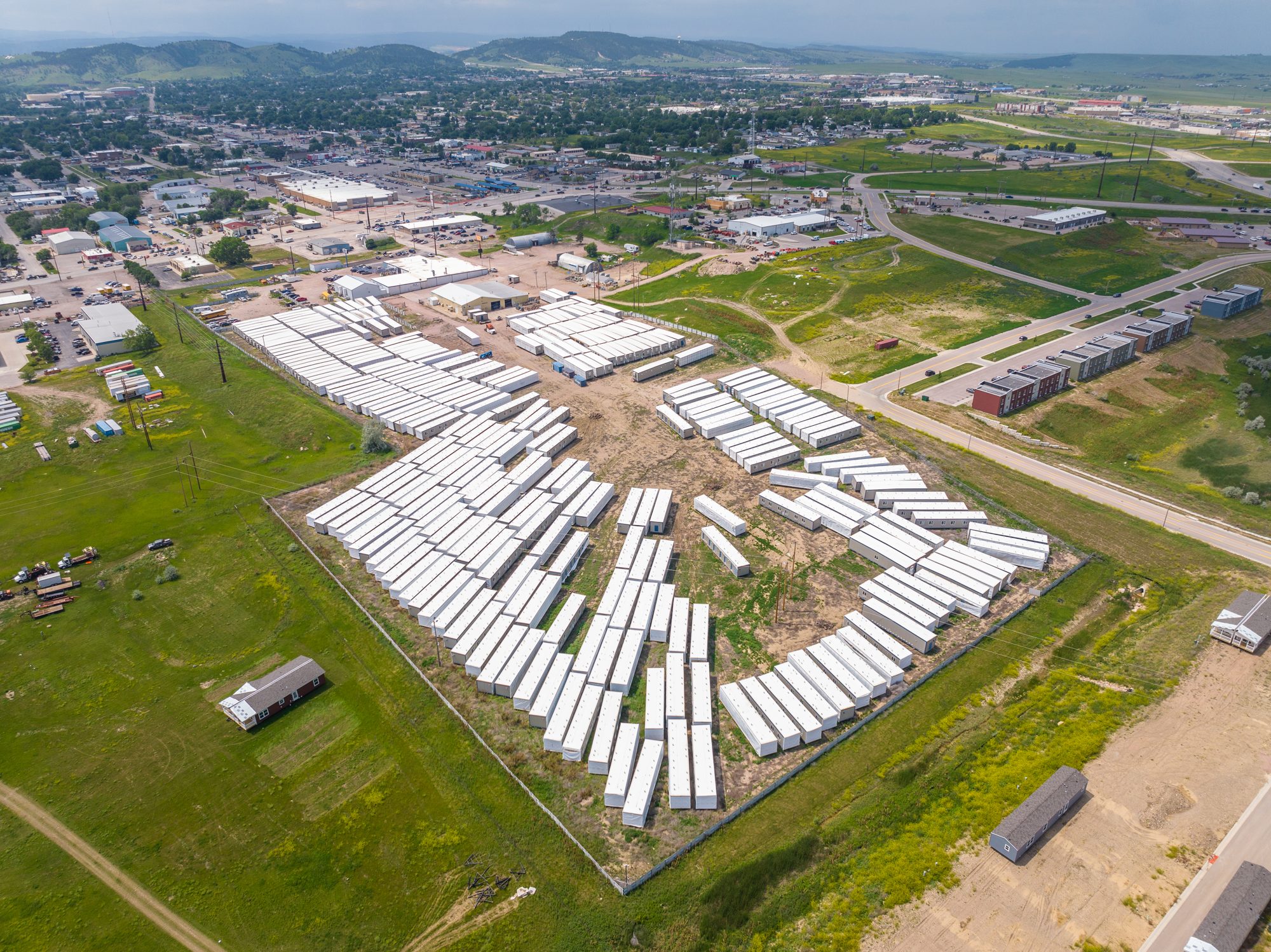
Rapid City, South Dakota · 24-hour ship lead time
404-Bed Turnkey Workforce Camp. New, Unused, Ready to Ship
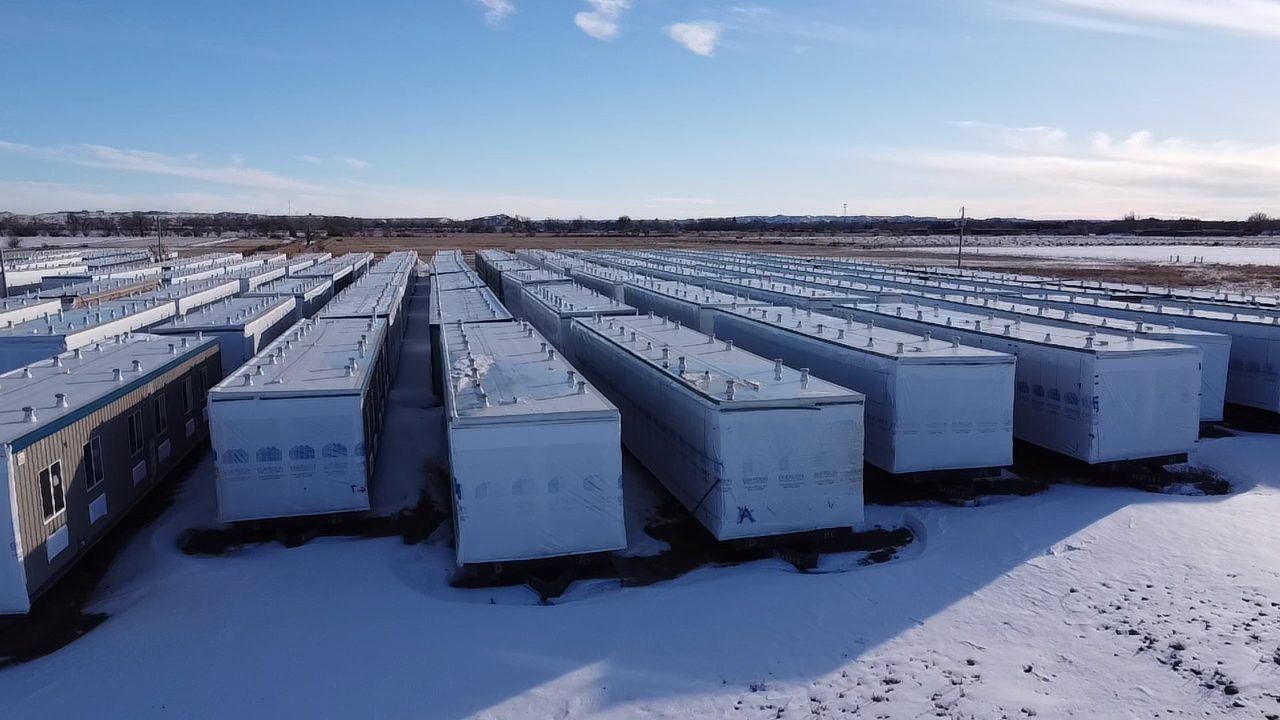
New, unused 2013–2014 Guerdon-built modules staged in Rapid City, SD, and ready to load in 24 hours. Plug-and-play, configurable workforce housing for planned industrial projects like mining, oil and gas, LNG, pipeline and data centers, and for emergency response when beds are needed this week.
- Arctic-grade insulation
- NTA & IBC certified
- Lease · Purchase · Install
404
Beds, new and unused
21
Box kitchen & dining facility
24
Hour ship lead time (hrs)
6
Jurisdictional certifications
What's included
A complete camp, not a pile of boxes
Everything a 400-person crew needs to live, eat, work and get medical attention on site. Buy the full camp or take individual sets.
(7)
48-Bed Jack & Jill Dorm
approx. 7,560 sq ft each / 8 modules
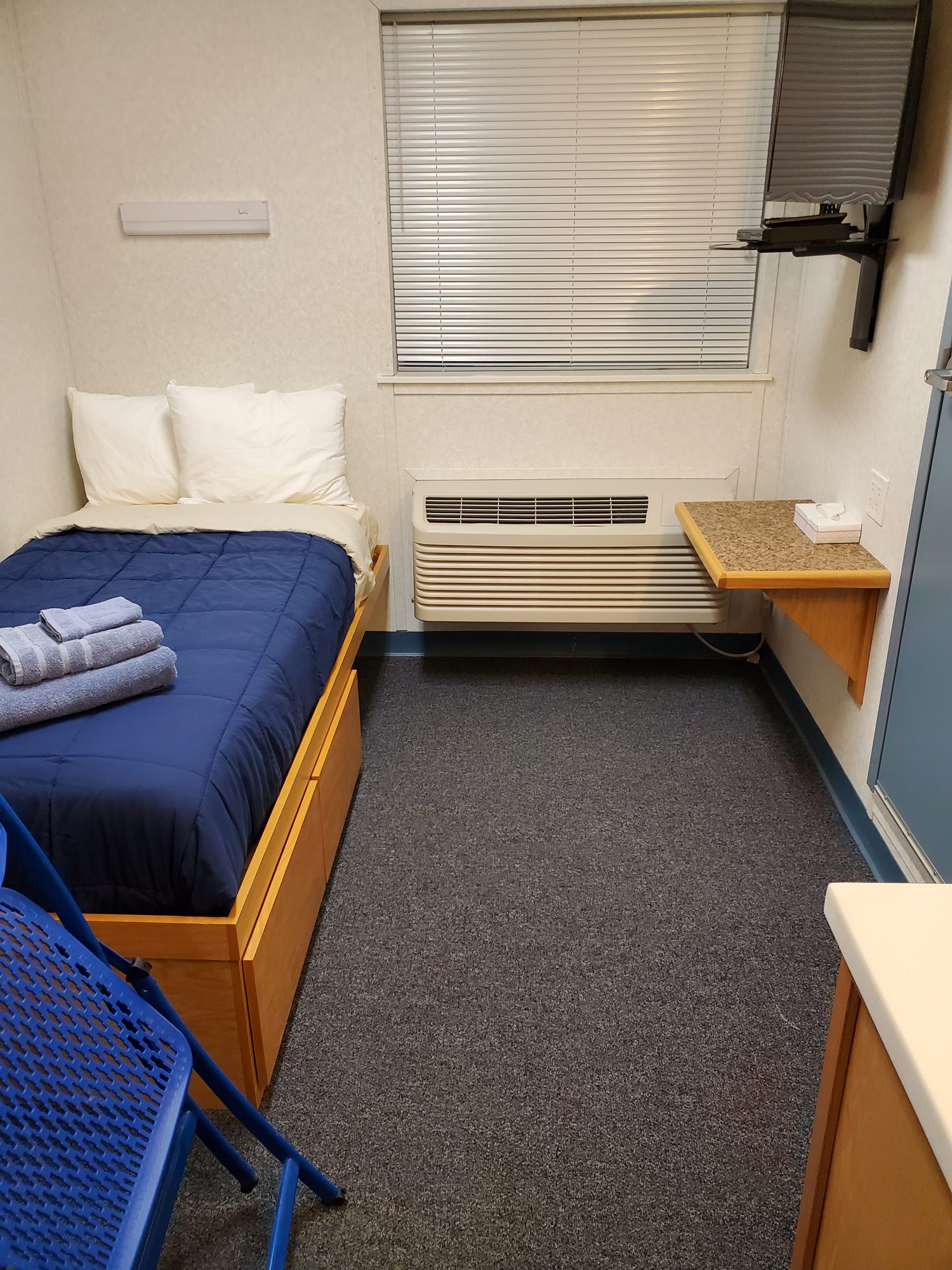
The backbone of the camp: seven complete 48-bed dormitory sets, 336 beds in total. Each room is built for a working adult on rotation, not a bunkhouse.
(2)
34-Man Dorm: 30-Bed J&J + 4 VIP Rooms
approx. 5,630 sq ft each / 6 modules
Supervisor and client housing. Two 34-man sets, each carrying four VIP rooms with private bathrooms. These are the rooms you assign to site management, inspectors and visiting client reps.
(1)
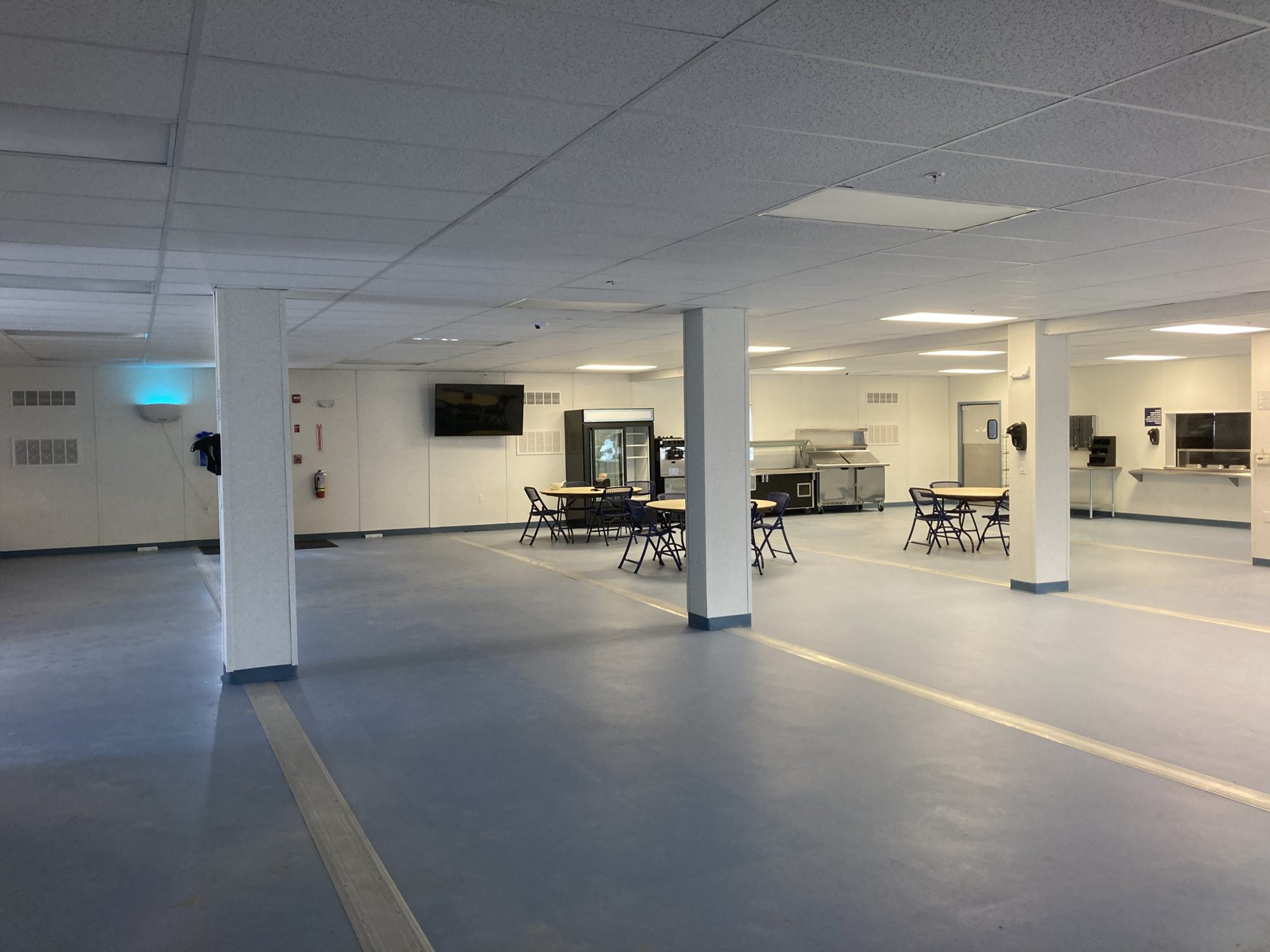
21-Box Kitchen / Dining Facility
approx. 14,936 sq ft
A 21-module commercial kitchen and dining hall sized to feed a 550-person camp on shift rotation, including night crews.
(2)
Office / Infirmary
approx. 1,309 sq ft each
Camp administration and onsite medical in one building: check-in, safety briefings, first aid and occupational health.
(2)
Stand-Alone Laundry
approx. 760 sq ft each
Functional onsite laundry, one of the strongest predictors of whether a crew stays on a remote project.
(2)
Commissary
approx. 760 sq ft each
Onsite retail for essentials so workers are not driving hours for toothpaste, gloves or a phone charger.
(2)
Guard House
approx. 230 sq ft each
Controlled access at the camp gate: badge checks, visitor logs and 24/7 occupancy in any weather.
Assembly materials for roof, floor, interior corridors and end walls are sold separately.
Full inventory and specsThree ways to get beds
Buy. Lease. Or have us install it.
Purchase
Own a depreciable, relocatable, resalable asset. Best for projects over 36 months or programs that will move the camp to a second and third site.
Lease
Monthly terms from 6 months, per bed or per building, with lease-to-own conversion. Keeps housing in opex and often passes through to the client.
Full install
Transport, crane set, leveling, corridor connection, electrical tie-in and mechanical commissioning. You hand us a pad and mobilize onto a finished camp.
Economics · our 2026 industry analysis
$250/day vs. $60/day. Same worker. Different outcome.
Per-worker, per-day, all-in. The nightly rate is the smallest part of the difference.
| Metric | Hotel / per diem | Modular onsite |
|---|---|---|
| Daily housing cost per worker | $120 – $250+ | $40 – $80 |
| Annualized turnover | 35% – 50% | 15% – 25% |
| Asset residual value | None; the night is gone | Relocatable and resalable |
| Tax treatment | Expense only | Depreciable capital asset |
“A worker who sleeps badly, eats badly, and drives 2 hours each way is not the same worker.”
Demand
Four industries. One bottleneck.
Mining
24/7 operations in geology-driven locations. Camp quality now shows up in union negotiations, not just HR surveys.
Oil, Gas & LNG
In the Permian Basin the best workers choose their postings partly on camp quality. Housing is a recruiting tool.
AI Data Centers
A $700B rural buildout. 60% of operators report hiring difficulty; Target Hospitality won a $132M housing contract.
Infrastructure & Pipeline
Linear projects that move every few weeks. Modular is not the preferred option. It is the only viable one.
Standard of care
Professional workforce accommodation.
The specification that separates a camp people stay in from a camp people quit.
- Private and semi-private rooms with real beds
- Hot meals on shift-rotation schedules, including night crews
- Functional onsite laundry
- Fast Wi-Fi
- Gym, common areas and entertainment space
- Cold-weather engineered HVAC plus life-safety systems
Who we house
Industries served
Oil, Gas & LNG
Permian Basin, Bakken, Gulf Coast LNG trains and everything in between. Crews rotate on 14/14 or 20/10 schedules and the nearest town is often over an hour away. The best hands increasingly choose postings partly on camp quality: a private room, a hot meal at 3 a.m. and working laundry is now a recruiting argument, not a perk.
Mining
Mines are located by geology, not by hotel supply, and they run 24/7. Camp quality has moved into union negotiations at multiple North American operations. Our modules are arctic-rated and already certified for South Dakota, Montana and Alberta, so northern operations do not need a separate winterization program.
Pipeline & Heavy Construction
Linear projects move. A spread that advances 3 to 8 miles a week cannot be tied to a fixed hotel block. Modular is the only viable housing model: set the camp, work the segment, relocate the camp. Every unit is transport-ready and designed to be set, leveled and re-set again.
Renewables: Solar & Wind
Utility-scale solar and wind farms need 300 to 800 workers for 12 to 24 months in counties with a few hundred hotel rooms total. Onsite housing removes the commute, protects the schedule and gives EPC contractors a fixed, predictable cost per worker instead of a bidding war on local rooms.
AI Data Centers
A roughly $700B rural data center buildout is underway, and 60% of operators report difficulty hiring. AI infrastructure alone is expected to generate 4.7 million temporary construction jobs. Target Hospitality's $132M housing contract made the point publicly: housing is now part of the critical path for a data center campus.
Disaster Response & Emergency Housing
When beds are needed in days, a 24-hour ship lead time is the whole argument. FEMA contractors, state emergency management agencies and utility restoration crews can stage 404 certified beds from Rapid City without waiting on a manufacturing queue.
Agriculture
Seasonal and H-2A workforces need compliant, inspectable housing that stands up to occupancy standards. Dormitory modules with real beds, sinks, HVAC and functional laundry meet a far higher bar than the trailers and converted buildings still common in the sector.
Government & Defense
Base support, border operations, wildland fire staging and training surges. Units are certified to NTA and IBC and to state programs in South Dakota, Montana, Texas and Alberta, which shortens the approval path for public agencies and their prime contractors.
Remote Resorts & Hospitality
Mountain and destination resorts run on seasonal staff who cannot afford or find local housing. Dormitory modules with private-feeling rooms, TVs, real bathrooms and onsite laundry let operators staff a season without exporting the housing problem to their employees.
New vs. used
Why new and unused beats a refurbished camp
Used inventory arrives with someone else's maintenance history, expired labels and mattresses your crew will notice on night one.
| Factor | Typical used camp | Our inventory |
|---|---|---|
| Condition | 10–20 years of occupancy, deferred maintenance, unknown history | Built 2013–2014 by Guerdon and never occupied |
| Lead time | Refurbishment cycle of 8–16 weeks before shipping | 24 hours to ship from Rapid City |
| Certifications | Often expired or single-state; re-certification required | South Dakota, Montana, Texas, Alberta, NTA and IBC |
| Mechanical systems | Aging HVAC, patched electrical, unrated insulation | Arctic-grade insulation, complete HVAC and electrical, unused |
| Crew reaction | Stained mattresses and worn finishes cost you hands | New mattresses, clean finishes, working TVs and fixtures |
| Residual value | Depreciated near the end of its life | Full remaining service life, relocatable and resalable |
Gallery
Inside the inventory
Real photos of the actual inventory in Rapid City: yard, exteriors, dorm rooms, kitchen, dining, corridors, transport and set.
Process
How it works
01
Tell us your headcount and site
Peak beds, location, timeline and whether you want purchase or lease pricing.
02
Get a quote and layout
Purchase and lease side by side, with a camp layout and footprint dimensions for your pad.
03
We ship and install
Units load within 24 hours. Transport, crane set, corridor connection and commissioning.
04
You mobilize
Your crew sleeps on site, eats hot meals on rotation, and stops driving 180 miles a day.
Free download
Where Are Your Workers Sleeping Tonight?
The answer is costing you more than you think.
The onsite housing playbook that top mining, energy, and infrastructure projects already use. 9 pages, no fluff.
- Hotel and per-diem housing runs $120–$250 per worker per day. Modular onsite runs $40–$80.
- Turnover runs 35–50% without onsite housing, versus 15–25% with it.
- A West Texas operation housed 150 workers at $28,000 per worker and held 95% retention for the full project.
- 180 miles is the average distance from site to the nearest city on a major remote project.
Insights
From the blog
Economics
Man Camp vs. Hotel Rooms: The Real Cost of Housing a 500-Person Crew
Hotels and per diem run $120–$250 per worker per day. Modular onsite housing runs $40–$80. Here is the full arithmetic for a 500-person crew, including turnover and residual value.
Planning
How to Size a Workforce Camp: Beds, Kitchen Capacity and Utilities
A practical sizing method for workforce camps: peak headcount versus bed count, kitchen throughput on rotation, water and power loads, and the buffer that keeps you off the phone with a rental broker.
Economics
Buying vs. Leasing Modular Workforce Housing
Duration, balance sheet treatment, relocation plans and residual value decide whether you should buy or lease a workforce camp. A decision framework with the break-even math.
FAQ
Questions procurement teams ask first
- How fast can the camp ship?
- Units are staged and ship-ready with a 24-hour lead time from our Rapid City, South Dakota yard. Transport duration then depends on distance and permitting. A Texas or Alberta delivery typically lands within a week of the order.
- Can I buy part of the camp instead of all 404 beds?
- Yes. Inventory is sold in complete sets: a 48-bed dorm set, the kitchen and dining facility, an office/infirmary. That means you can take 96 beds or the full 404. Most buyers start with dorms plus kitchen and add laundry, commissary and guard house from there.
- Do you install, or is it delivery only?
- Both. We can deliver to your pad, or handle full installation: crane set, leveling and cribbing, corridor connection, electrical tie-in and mechanical commissioning. Assembly materials for roof, floor, interior corridors and end walls are sold separately from the modules.
- What certifications does the inventory carry?
- South Dakota, Montana, Texas and Alberta state and provincial programs, plus NTA third-party certification and IBC compliance. That covers most North American industrial jurisdictions and shortens the local approval path.
- Can these units handle extreme cold?
- They are built for it. Arctic-grade insulation with engineered HVAC and complete electrical: the same specification proven from Minnesota winters to Texas summers. Alberta certification means the envelope and mechanicals meet a cold-climate standard, not a mild-weather one.
- Should I buy or lease?
- Lease when the project is under about 18 months or the budget lives in opex. Buy when the project runs longer, when you expect to relocate the camp to a second site, or when you want a depreciable asset with resale value at the end. We quote both side by side so you can compare total cost.
Next step
Get pricing on 404 new, unused beds
Send your headcount, site and timeline. You get purchase and lease pricing plus a camp layout, usually the same day.
- Response time
- Within 1 business day
- Ship lead time
- 24 hours