Certification
What NTA and IBC Certifications Mean for Modular Housing
NTA third-party certification, IBC compliance and state modular programs decide whether your camp gets an occupancy approval. What each one covers and what inspectors actually check.
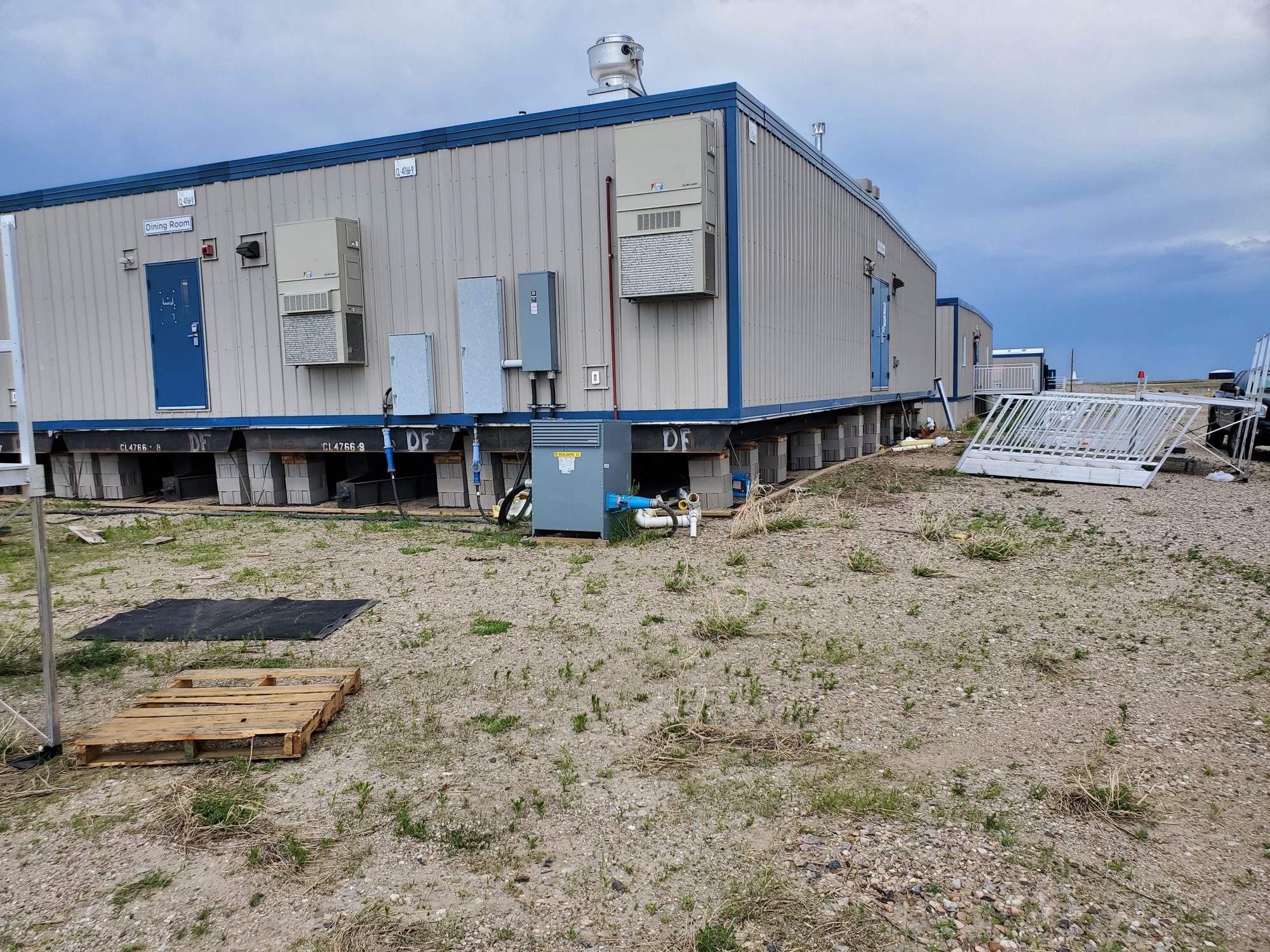
Certification is the least exciting part of buying a workforce camp and the most common reason a camp sits unoccupied on a finished pad. Here is what the labels mean, who enforces them, and what to verify before you sign.
IBC: the code the building is designed to
The International Building Code is the model code adopted, with amendments, by nearly every US jurisdiction. For a workforce camp, an IBC-compliant dormitory building is designed against a specific set of requirements:
- Occupancy classification. Dorms are typically R-1 or R-2 residential. Kitchens and dining are A-2 assembly. Classification drives egress, separation and fire protection requirements. It is why a dining hall is engineered differently from a dorm even though both are steel-framed boxes.
- Structural loads. Roof snow load, wind speed and seismic design category are location-specific. A module engineered for a 30 psf snow load is not automatically acceptable in a 70 psf county.
- Egress. Corridor widths, travel distance to an exit, door swings, exit signage and emergency lighting.
- Fire and life safety. Rated assemblies between units, smoke alarms, and sprinklers where required by occupancy and building size.
- Energy envelope. Insulation values, glazing performance and air sealing per the applicable energy code.
IBC is what the engineer designed to. It is not, by itself, proof that the building was built that way.
NTA: the third party that verifies the build
NTA is an accredited third-party agency that inspects modular buildings in the factory. That distinction matters. Site-built structures get inspected on site by the local authority. Modular buildings are closed up in a plant hundreds of miles away, so the wall cavity that a local inspector would normally open is already covered in drywall by the time the module arrives.
An NTA program means an independent inspector was in the plant reviewing:
- Approved engineering drawings before production.
- In-process inspections at framing, electrical rough-in, mechanical and insulation stages.
- Materials and assemblies against the approved plan set.
- Final inspection and application of a data plate and serial number tying the unit to its approved design.
The output is a label on the unit and a paper trail. That label is what lets a local building official accept the closed portions of the building without demolition.
State and provincial programs
On top of IBC and third-party inspection, most states run their own modular program with its own approval, label and in-state amendments. Our inventory is certified for South Dakota, Montana, Texas and Alberta, plus NTA and IBC.
What that gets you in practice:
- Reciprocity is common but not automatic. Many states accept another state's approval if the unit was inspected by an accredited agency, but they usually still require registration, a plan review of the site-specific installation, or a state label.
- Alberta matters for cold-climate credibility. Alberta's requirements are cold-weather requirements. A unit approved there was evaluated against an envelope and mechanical standard that a mild-climate approval never tests.
- Texas matters for heat and wind. The opposite end of the same argument, plus wind design in coastal counties.
What the local authority still reviews
Even with a fully labelled, certified module, the local jurisdiction reviews everything that happens on your site:
- Foundation and anchorage design, stamped by an engineer licensed in that state.
- Site plan, setbacks, fire lanes and fire department access.
- Utility connections: water, sewer or treatment, and electrical service.
- Corridor and end-wall assembly, which is site work on a modular camp.
- Final occupancy inspection of the assembled building.
This is where schedules slip. The modules can ship in 24 hours; a stamped foundation design and a permit review can take six weeks. Start the local approval process the same week you start shopping.
Questions to ask any supplier
- Which agency inspected these units, and can I see the approval and the data plate photos?
- What snow, wind and seismic loads were they engineered for?
- Which states or provinces are they currently labelled for, and what is the reciprocity path to mine?
- Were the units modified after certification? Any modification can void the label.
- Who provides the stamped foundation and anchorage design for my jurisdiction?
- What is the year of manufacture and the code cycle it was approved under?
That last one deserves attention. A camp built in 2013 or 2014 to an IBC cycle is a known, documented quantity. A camp with no paperwork, no data plate and an unclear modification history is a very expensive lawn ornament.
Why used camps fail the paperwork test
The certification problem is one of the strongest arguments for new, unused inventory. Used camps have often been modified in the field (walls moved, HVAC swapped, corridors rebuilt) with no engineering behind the change and no re-inspection. Re-certifying a modified unit means opening finished assemblies, retaining an engineer and going back through an agency, and it routinely costs more than the discount that made the used camp attractive.
Certification is not paperwork for its own sake. It is the difference between a camp your crew sleeps in next month and a camp your lawyer discusses next quarter.
Next step
Get pricing on 404 new, unused beds
Send your headcount, site and timeline. You get purchase and lease pricing plus a camp layout, usually the same day.
- Response time
- Within 1 business day
- Ship lead time
- 24 hours